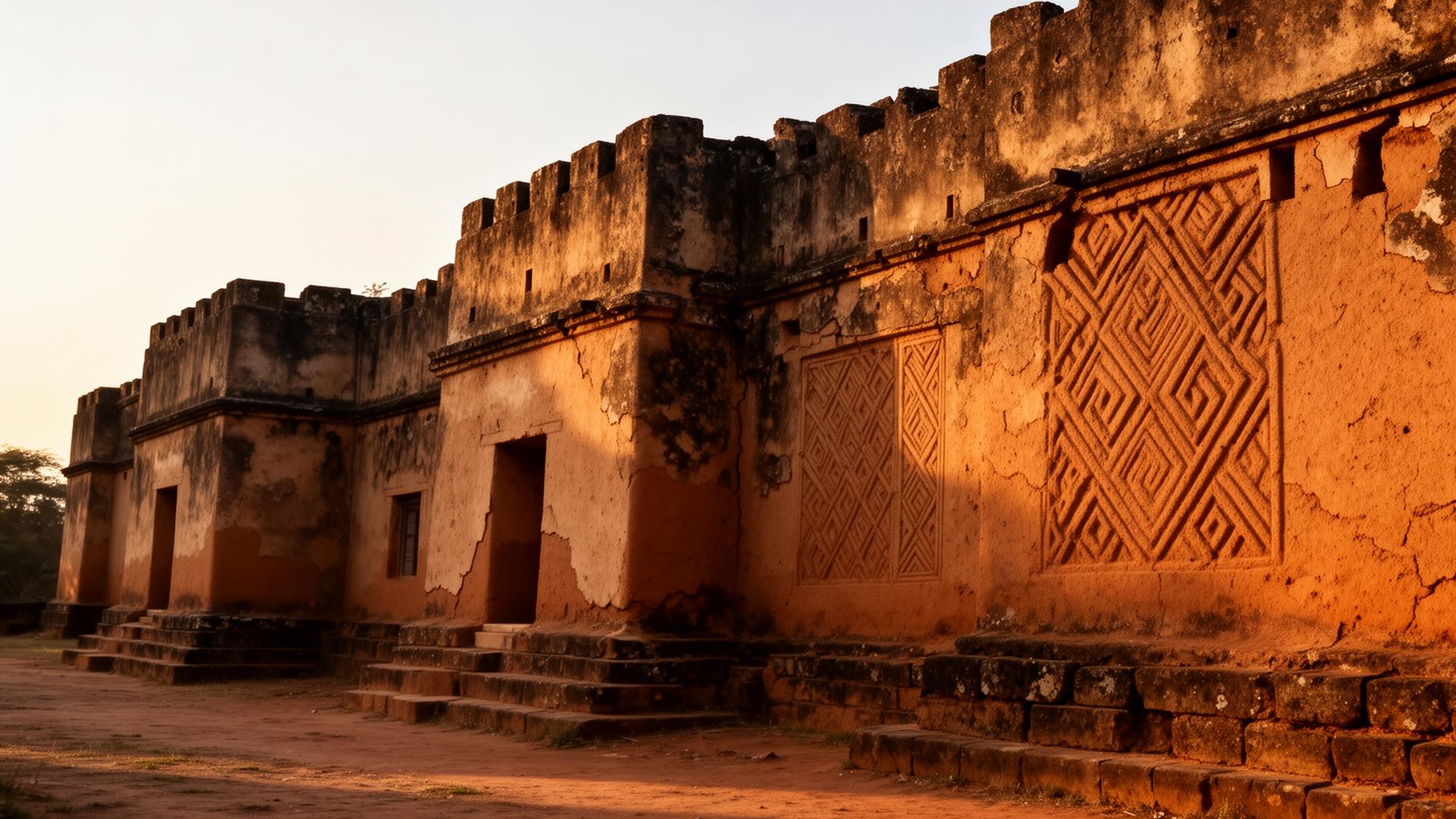
History of the Jukun
Eight centuries of kingship, migration, and resilience — from the empire of Kwararafa to the living throne of the Aku Uka.
The long arc of Jukun civilization
- c. 9th–13th Century
Origins & Migration
Jukun oral tradition traces the people to a great eastward migration — from Yemen or the Upper Nile — across the Lake Chad basin, finally settling along the Benue valley. These early movements laid the spiritual and political foundations of what would become Kwararafa.
- 13th–17th Century
The Kwararafa Confederation
At its height, Kwararafa was a confederation of peoples under Jukun spiritual and military leadership. Its armies challenged Bornu and besieged Kano; its markets connected the forest belt with the Sahel. The Aku Uka reigned as both king and high priest.
- 17th–18th Century
Decline & Transformation
Repeated wars, internal succession disputes, and pressure from rising states gradually eroded Kwararafa's centralised power. The Jukun retreated southward, consolidating around Wukari — which became the new spiritual capital.
- 19th Century
The Wukari Kingdom
The modern Jukun Kingdom of Wukari was founded around 1840 after the fall of older settlements. Despite the pressures of the Fulani jihad and colonial encroachment, the Aku Uka throne preserved Jukun identity and ritual sovereignty.
- 20th Century
Colonial Era & Independence
Under British indirect rule, Wukari became a recognized native authority. Jukun elites contributed to Northern Nigerian politics, education, and the military. The institution of the Aku Uka endured as both cultural anchor and constitutional traditional ruler.
- 21st Century
A Living Heritage
Today the Jukun stand as guardians of a millennium-old civilization — actively preserving language, festivals, and royal tradition while engaging with modern Nigeria, scholarship, and the global African diaspora.
A people of memory
"The Jukun are not merely a tribe — they are a memory of an empire, a continuity of priesthood, a living archive of the African past."